Ceramics
Examples of Early Eastern Canadian Ceramics
Documented pottery from Quebec and the Maritimes, from nineteenth-century household wares to early studio work.
A few useful examples to compare
Eastern Canadian ceramics cover a wide area and more than one tradition. These examples focus on Quebec and the Maritimes, beginning with nineteenth-century household pottery and continuing into the early studio-pottery movement. They are a starting point for looking closely, rather than a complete history of the region’s ceramics.
For each piece, separate three questions: where was it made, who made or decorated it, and when? A Canadian place name can refer to a seller rather than a pottery. Research on nineteenth-century importers’ marks documents this distinction for dealers in Halifax, Saint John and Quebec City. Canadian importers’ marks, Material Culture Review.
A nineteenth-century earthenware bowl from Quebec
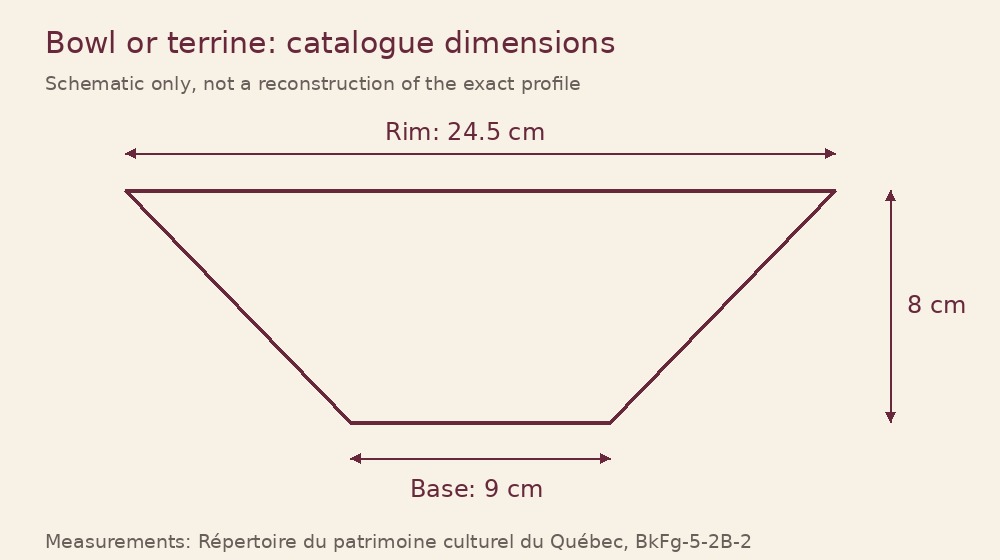
Quebec’s archaeological reference collection includes a nearly complete bowl or terrine associated with the workshop of Joseph II Bélangers at Saint-Denis-sur-Richelieu. The catalogue gives the bowl’s production range as 1838–1888 and identifies wheel-thrown coarse earthenware with a colourless glaze. At 24.5 centimetres across the rim, it is an ordinary working vessel rather than a display piece.
The important evidence is its recovery from a pottery-waste pit at the workshop. That gives the attribution a firmer basis than simply finding a similar-looking bowl in Quebec. Quebec heritage collection: Bélangers bowl or terrine.
Farrar stoneware from Iberville
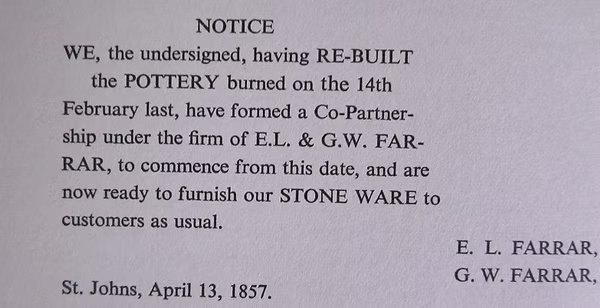
A surviving jug fragment in the Place-Royale reference collection bears an impressed E. L. Farrar mark naming Iberville, Quebec. The catalogue places its production after 1881 and before 1918. It describes a dark grey stoneware body, a brown Albany coating inside and a salt-glazed exterior.
This is a useful comparison for the combination of mark, body and surface. The date range belongs to this documented object; it should not be applied automatically to every Farrar jug. Quebec heritage collection: Farrar jug fragment.
Cap Rouge pottery in Quebec
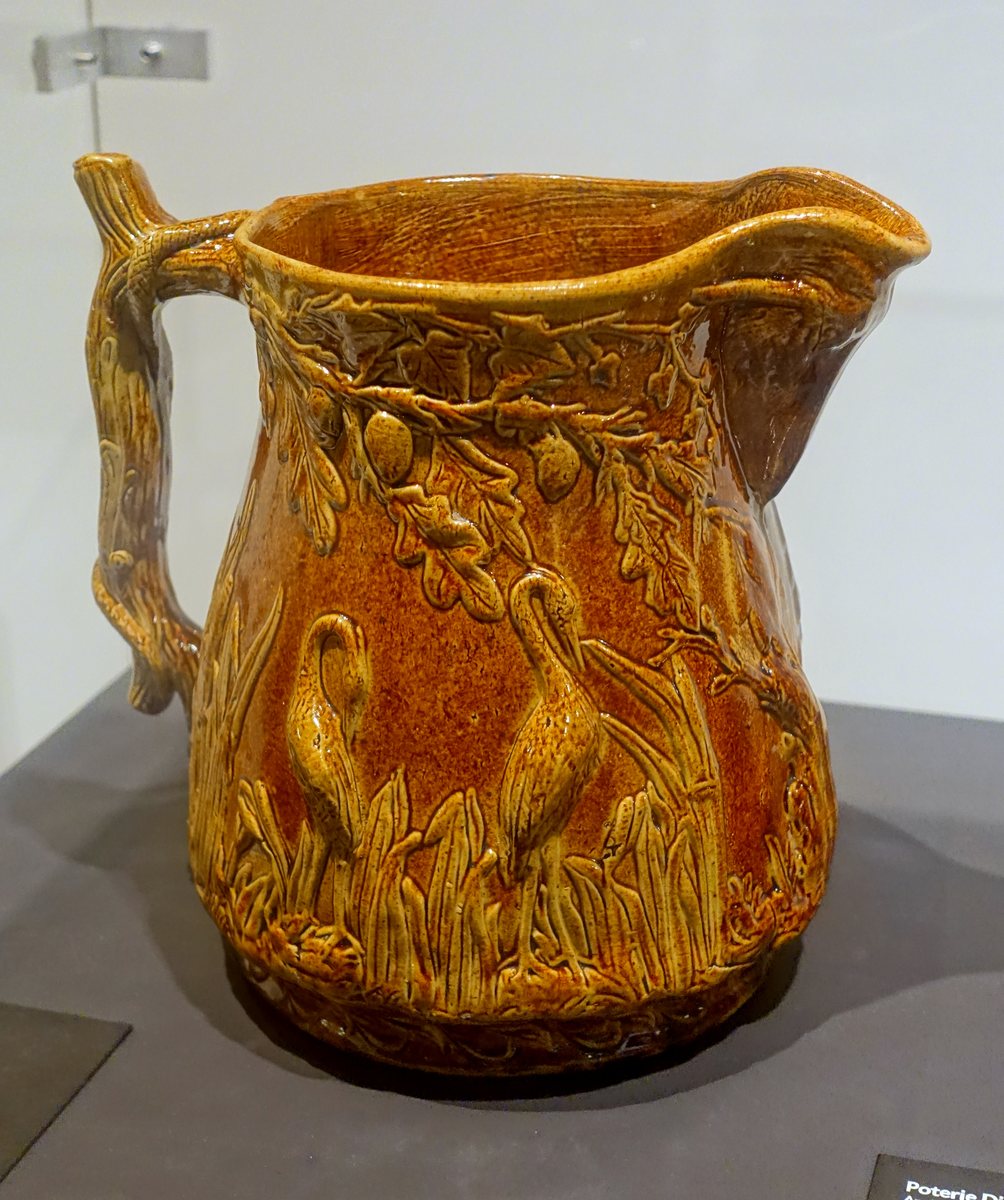
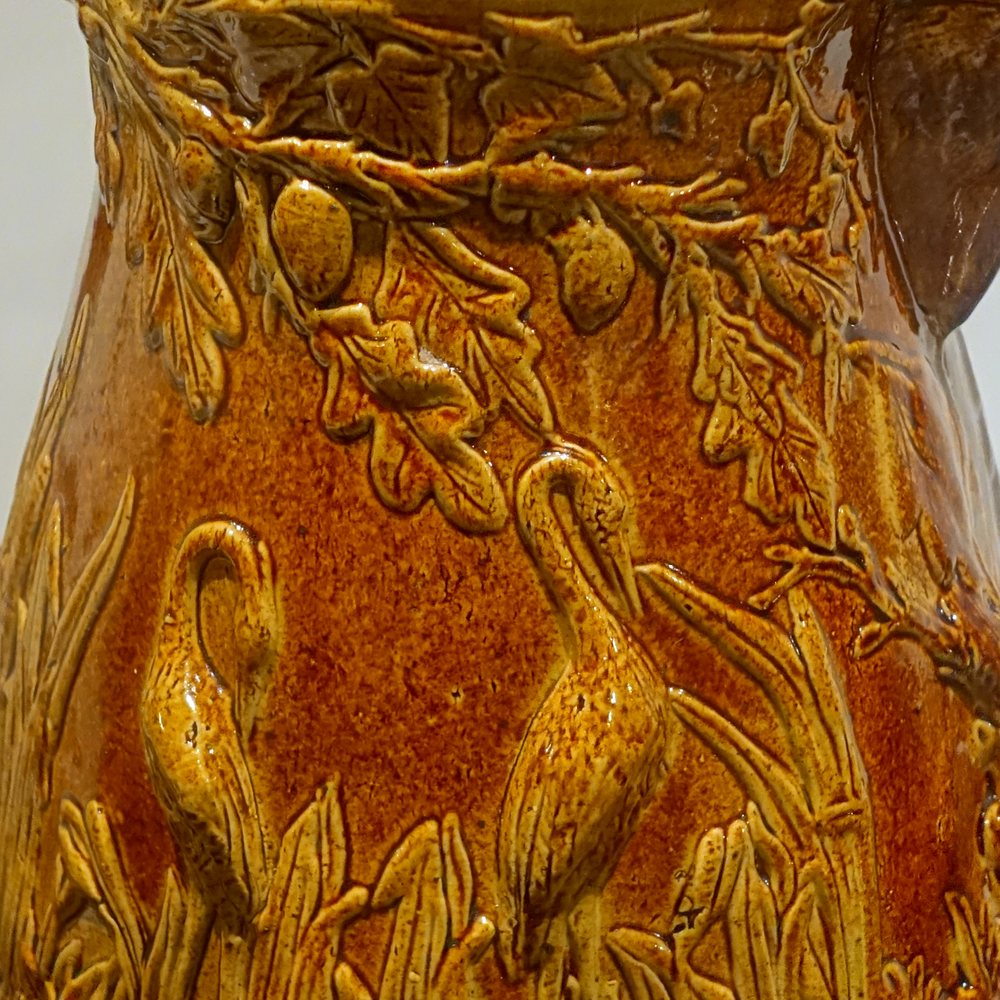
The Cap Rouge jug pictured above is dated 1875–1880 and was photographed at the Montreal Museum of Fine Arts. Its raised decoration and glaze provide another nineteenth-century example to compare with the household bowl and stoneware discussed above.
Mary Allison Doull’s Island-clay pottery
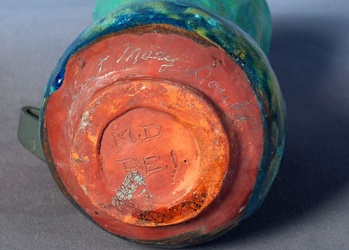
On Prince Edward Island, Mary Allison Doull turned increasingly to pottery around the late 1920s. At Cape Traverse she prepared clay from the nearby shore and made pieces by hand or with moulds. The PEI Museum and Heritage Foundation illustrates her work, including the base of a vase signed “M.D. PEI.”
These early studio pieces belong to a later period than the Quebec household wares above. The collection is particularly helpful because it shows a maker’s mark alongside the pottery and biographical evidence, rather than treating red clay alone as proof of Island manufacture. PEI Museum: Mary Allison Doull collection.
On this photographed base, the incised initials and PEI lettering sit inside the foot, while the pencilled ownership wording runs around it. The exposed orange-red clay contrasts with the blue-green glaze at the edge. Those separate marks should be recorded separately: a maker’s inscription and a later ownership note are different kinds of evidence.
Alice Egan Hagen in Nova Scotia
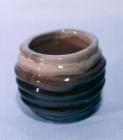
Alice Egan Hagen’s work provides another early studio-pottery comparison. Mount Saint Vincent University Art Gallery’s online collection includes a glazed earthenware coil pot, listed as undated, and describes her use of wheel throwing, moulds and hand-building. Avoid assigning a precise year to a similar object just from its shape. MSVU Art Gallery: Hagen’s pottery techniques and objects.
The coil pot’s rounded walls retain pronounced horizontal ridges. A pale upper band contrasts with the dark blue-green lower body, making its built-up surface visible rather than disguising it as a smooth wheel-thrown form. The exhibition labels the work undated, so these visible features should not be used to assign a precise year.
Deichmann pottery in New Brunswick
Kjeld and Erica Deichmann established their New Brunswick studio in the 1930s. The Royal Ontario Museum’s collection feature illustrates their pottery and explains their experiments with clay and glazes. Although they sought local materials, they eventually used Nova Scotia clay as their main clay body. Place of manufacture and source of clay are therefore separate details. ROM: New Brunswick’s Deichmann pottery.
When comparing your own piece, photograph its base, mark, rim and any existing chips without scraping or cleaning them. Record measurements and known ownership history. A close resemblance is a useful lead; a supported identification needs the details to agree.
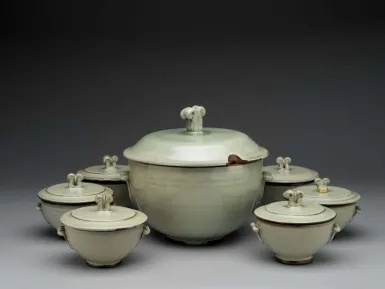
The ROM’s soup service makes the relationship between shape and glaze easier to compare: a large covered tureen is surrounded by smaller lidded bowls, with pale green surfaces and repeated raised handles. Look at those repeated details together rather than relying on green glaze alone to identify a Deichmann piece.